
Table of Contents
ToggleHow to Select the Right Hydraulic Oil for Industrial Machines
Right Hydraulic Oil for Industrial Machines
Choosing the correct hydraulic oil for Industrial Machines is one of the most important decisions for any industrial plant. If the oil is right, machines run smooth, stay cool, work faster, and last longer. If the oil is wrong, your operation will face breakdowns, leakage, heat issues, and expensive part replacements. This simple truth has been the same for decades—and it will not change.
This guide explains how to select the right hydraulic oil for industrial machines in a simple, practical way. Whether you handle pumps, presses, loaders, or CNC machines, the following points will help you make a safe and smart choice.
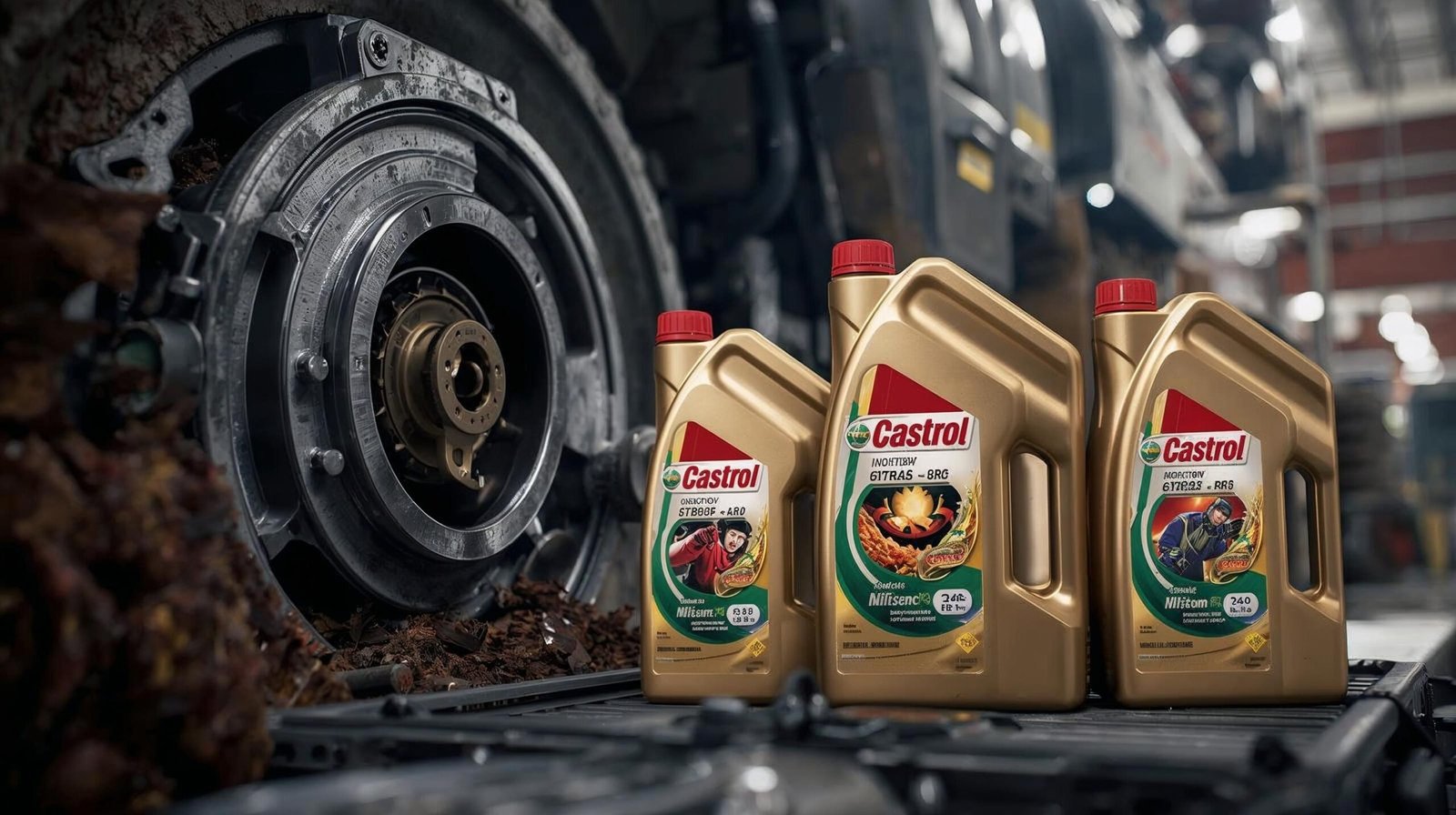
As an authorized distributor of Castrol Industrial Lubricants, we strongly follow industry standards and OEM recommendations. Castrol hydraulic oils for Industrial Machines are trusted worldwide because they maintain stability under pressure, temperature, and heavy loads.
1. Understand the Role of Hydraulic Oil for Industrial Machines
Before selecting oil, it’s important to know what it actually does inside the machine. Good hydraulic oil must:
- Transfer power smoothly
- Reduce friction between moving parts
- Protect metal surfaces from wear
- Control temperature
- Prevent rust and corrosion
- Keep the system clean by suspending dirt and contaminants
A hydraulic system performs best only when the oil quality matches the machine’s operating conditions. That is why choosing the right grade is essential.
2. Check the Required Viscosity Grade (Most Critical Step)
Viscosity is the thickness of the oil. Every machine is designed to work with a specific viscosity grade, usually written as ISO VG 32, ISO VG 46, or ISO VG 68.
- ISO VG 32 → Thin oil for high-speed, low-load systems
- ISO VG 46 → Balanced oil for general industrial use
- ISO VG 68 → Thick oil for high load or high-temperature operations
If the oil is too thin, it will not create proper lubrication.
If it is too thick, the machine will struggle to run and build heat.
Always follow the viscosity grade given in the OEM manual.
3. Consider Operating Temperature
Industrial machines run in different temperature environments—some indoors, some outdoors, some under heavy load.
- If your machine runs hot, choose hydraulic oil with strong thermal stability.
- If your factory is in a cold region, select oil with good low-temperature flow.
- If the machine operates under high-pressure cycles, oil with high viscosity index is required.
Castrol hydraulic oils are known for excellent temperature performance and stable viscosity in all industrial conditions.
4. Look for the Right Additives
Modern hydraulic oils contain additives that improve performance and protect the system. Important additives include:
Anti-wear (AW) additives
Protect pumps and metal surfaces from wear. Suitable for most industrial hydraulic systems.
Rust & corrosion inhibitors
Prevent moisture-based damage, especially in humid environments.
Anti-foam agents
Keep oil clear and prevent air bubbles, ensuring smooth operation.
Oxidation resistance
Keeps oil stable for long time, reducing oil change frequency.
Castrol hydraulic oils come with advanced additive technology designed for industrial reliability.
5. Check the Machine’s Load and Duty Cycle
Machines used occasionally need simple oils, but machines used 24/7 need high-performance oils that handle continuous pressure.
- Light-duty machines → Basic hydraulic oil
- Medium-duty machines → Anti-wear hydraulic oil
- Heavy-duty or constant load machines → Premium grade high-performance hydraulic oil
If you are using presses, heavy mobile machinery, injection moulding machines, or industrial cranes, always pick a strong anti-wear Castrol grade.
6. Confirm OEM Recommendations
Every manufacturer clearly mentions which oil should be used. Never ignore this.
OEM guidelines include:
- Required viscosity
- ISO grade
- Additive type
- Oil performance level such as DIN, ISO, or ASTM standards
Choosing oil outside these recommendations may void warranty or create long-term damage.
7. Consider the Working Environment
Your hydraulic oil must match the factory conditions:
- Dusty areas → Oil with high filtration stability
- Moist areas → Rust-protected oil
- Outdoor machines → Temperature-resistant oil
- High torque machines → High-pressure stability
Castrol designs oils for all kinds of industrial environments, from small workshops to heavy manufacturing plants.
8. Energy Efficiency and Long Oil Life
High-quality oils may cost little more, but they save big money over time. Castrol hydraulic oils reduce energy consumption by lowering friction and improving pump efficiency. They also last longer due to strong oxidation resistance.
This means:
- Fewer oil changes
- Less downtime
- Lower maintenance cost
- Better machine life
That’s why many industries prefer Castrol over cheaper alternatives.
9. Test and Monitor the Oil Regularly
Even the best oil fails if not checked. Make a routine:
- Check oil level
- Look for contamination
- Observe machine noise
- Monitor temperature
- Follow an oil sampling schedule
Regular testing keeps the machine safe and running smoothly.
Conclusion
Selecting the right hydraulic oil is not complicated if you follow the basics—viscosity, temperature, additives, load conditions, OEM guidelines, and environment. A correct choice ensures smooth performance, reliability, and long machine life.
Castrol hydraulic oils are engineered to deliver stable performance in tough industrial conditions, making them a trusted option for factories and engineering units worldwide.
If you need support choosing the correct grade for your machines, we are always here to guide you.